Most students have been there. Their notes are open, their laptop is on, and their phone is sitting right next to them. They tell themselves they are studying, but they keep checking messages or scrolling through videos. One notification turns into five minutes, and five minutes somehow turns into half an hour. By the end of the night, they feel like they were busy the whole time, but not much actually sticks. It feels productive because they were sitting at a desk, but in reality, they did not get much done.
This happens because scrolling constantly breaks focus. Every time students look at their phones, their brains have to switch gears and then work to refocus on their notes. That back and forth makes studying slower and more exhausting than it needs to be. Social media gives quick entertainment, which makes real studying feel boring in comparison. But real learning takes effort and full attention, even when it is not exciting.
To see if other students relate to this, senior Ava Briceland was asked about her experience with what many call “fake productivity.” When asked if she ever felt like she was studying but not actually learning much, she admitted, “All the time. I used to have my notes open and be scrolling at the same time. I thought I was multitasking, but when I would quiz myself later, I barely remembered anything.” She explained that it feels productive at the moment because students are technically sitting there with their work out. “You’re at your desk, your laptop is open, so it feels like you’re doing what you’re supposed to,” she said, “but your brain isn’t fully focused. You’re only half paying attention.”
She also shared that this habit made her more stressed before tests. “I would say I studied for two hours, but if I’m being honest, I probably only focused for maybe 40 minutes,” she said. Now she makes small changes, like putting her phone across the room or turning on Do Not Disturb. “It sounds simple, but it actually works. When I focus on shorter, distraction free blocks, I finish faster and feel less stressed.”
Fake productivity might seem harmless at the moment, but it adds up. As Ava put it, “If you’re going to study, actually study. Then scroll after. It feels way better knowing you really got your work done.” Sometimes, a small change in where a phone is placed can make a big difference in how much a student actually learns.
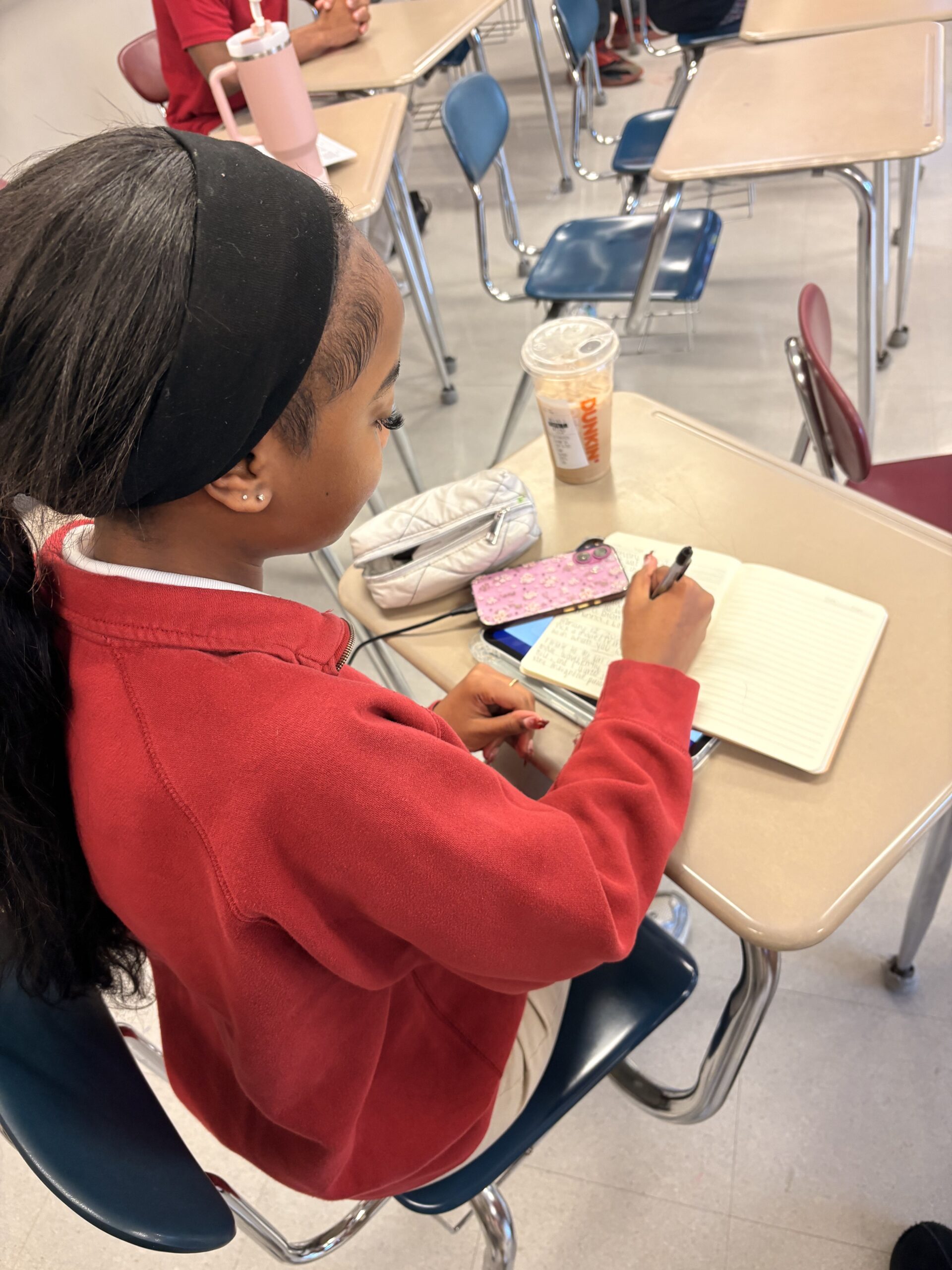
Senior Tyra Traylor being “productive” taken by Alexis Italiano