When a student fails a class, people often rush to place blame on either the student or the teacher. Many believe students are responsible because success depends on effort, attendance, and completing assignments. If a student does not study, skips class, or ignores deadlines, it becomes much harder to pass. Learning requires personal responsibility, and students must be willing to put in the work to succeed.
At the same time, teachers play a major role in whether students understand the material. A teacher who explains lessons clearly, offers support, and creates an engaging classroom can make a big difference. Campus Minister and Religion teacher, Mrs. Jones, explained, “Sometimes it feels like we just go through the motions, and a bit more discussion or hands-on stuff would make it easier to actually understand the lessons.” When instruction is confusing or students feel uncomfortable asking questions, even motivated students can struggle.
Senior, Ava Briceland, shared her perspective as a student: “I don’t think it’s all the teacher’s fault or mine. Sometimes stuff just doesn’t click, and by senior year it’s hard to stay on top of everything.” In reality, failing a class is rarely the fault of just one person. Students and teachers both contribute to success, and communication between the two is key. When students take responsibility and teachers provide support, failure becomes less likely.
Instead of focusing on blame, schools should focus on teamwork and solutions that help everyone succeed.
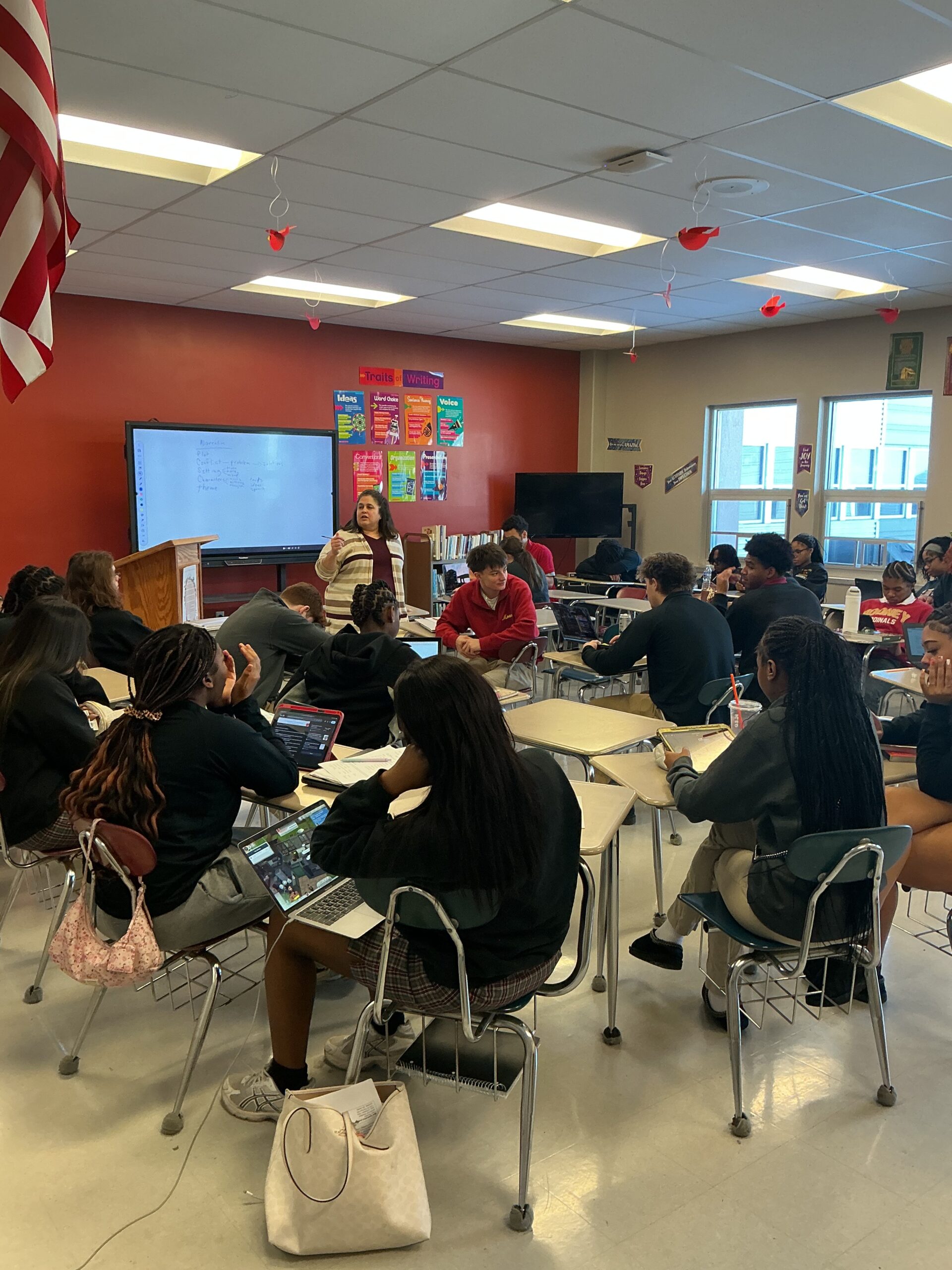
Mrs. Furano’s 12th grade English class taken by Alexis Italiano.