
As schools continue to look for ways to improve learning and reduce stress, one ongoing debate stands out, are block schedules better than traditional schedules? At Youngstown Cardinal Mooney, students and teachers have shared mixed opinions, showing that the answer often depends on learning style, workload, and personal preference.
A block schedule typically means fewer classes per day with longer class periods, while a traditional schedule includes more classes each day with shorter periods. Supporters of block scheduling argue that longer class periods allow teachers to go more in depth with lessons. Instead of rushing through material, teachers have time for discussions, labs, group work, and questions. Many students also like having fewer classes to focus on each day, which can make managing homework feel more manageable.
Some students at Mooney say the longer periods can make learning feel less stressful overall. “Block scheduling gives you more time to actually understand what you’re learning instead of just rushing through notes,” said Sophia Rotunno.
Block schedules can also reduce daily stress for some students. With fewer transitions between classes, students may feel more focused and less rushed throughout the day. Longer periods can be especially helpful in subjects like science, art, or math, where hands-on activities and problem-solving require extra time.
However, not everyone prefers block scheduling. One major concern is attention span. Sitting in one class for an extended period can be difficult, especially for students who struggle to stay focused. If a student misses a day of school, they may also miss a large amount of material in a single class, making it harder to catch up.
“Sometimes the classes feel really long, and it can be hard to stay focused the whole time,” said Frankie Cassese. “I think it depends on the subject and the teacher.”
Traditional schedules offer consistency and variety. Shorter class periods can help keep students engaged, and seeing each subject every day allows for regular review of material. Some students find it easier to remember information when they practice it daily rather than every other day or in longer blocks.
“I like traditional schedules because you’re switching classes more often and it keeps the day moving,” said Natalie Blasko. “It helps me stay more focused because I’m not in one subject for too long.”
Teachers also have mixed opinions. While block scheduling allows for more creative lessons, it requires careful planning to keep students engaged for longer periods. Traditional schedules, on the other hand, make pacing more predictable and allow for steady progress throughout the week.
-Mihali Frangos and Constantine Stamp
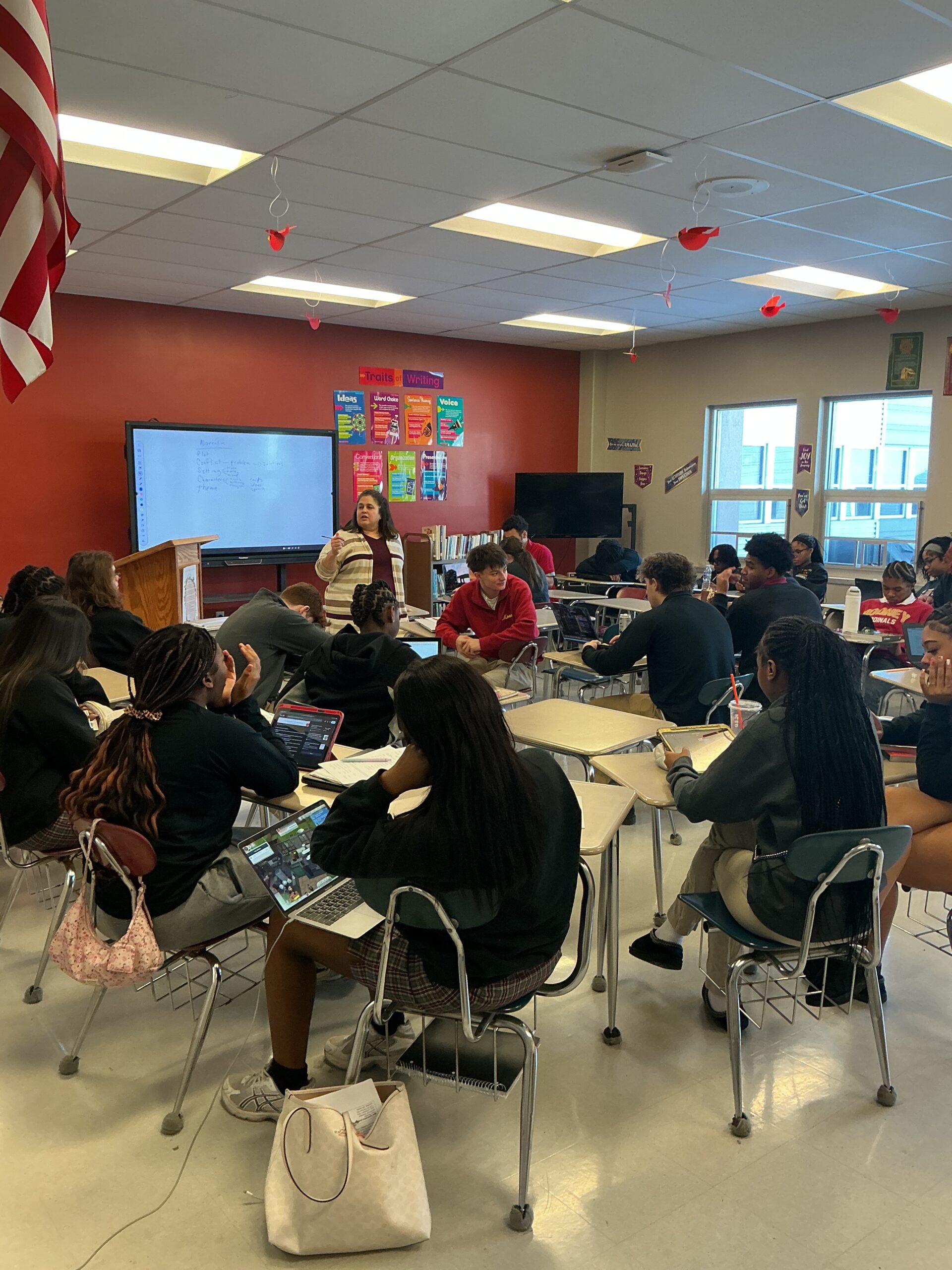
Cardinal Mooney Students in Class